
Reflections from SLCC national conference, November 2022
SLCC celebrated their 50th Anniversary in style with a fantastic national conference in Hinkley, Leicestershire earlier this month. It was the best-attended national conference in years, with well over 200 delegates and there was certainly a buzz around the place as colleagues caught up with each other, met with exhibitors, and heard from a fantastic range of keynote speakers and other colleagues over the course of two knowledge-packed days.
I had the honour of facilitating a breakout workshop of the morning of day 2 of the conference, titled ‘For Clerks with BIG ideas!’. The session had three main objectives: 1. to update colleagues on the work that I’ve been leading with Jonathan Bourne and others on identifying and tackling a number of ‘wicked problems’ facing senior professionals in our sector; 2. to provide some challenge to our traditional ways of thinking, and a call to arms to for us to dare to try new approaches to create a radically different future; and 3. to provide an example of a fun and effective lateral thinking tool to help loosen-up stuck thinking processes.
I’ve produced a report on the workshop which you can read here.
I was somewhat nervous about the workshop. I’d gone to bed relatively early after the black-tie awards dinner the night before, having picked up an award for ‘Best Case Study at a Regional Event’ for my presentation about post-covid challenges to a regional branch conference earlier in 2022. Talk about setting my own bar a bit high – now people were coming to see a workshop by ‘the award winning’ Ian Morris!
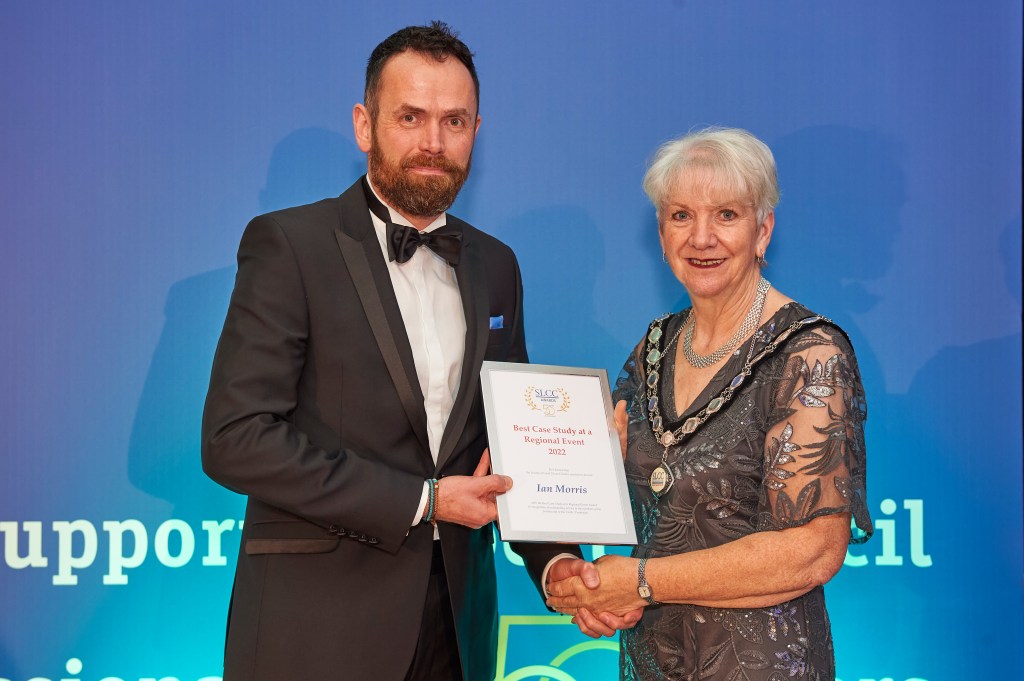
And I knew that a few (more than a few?!) colleagues would be a little tired and fragile after the social shenanigans from the night before. In fact, I wasn’t even sure whether many would even turn up for my breakout session, for which they’d need to drag their brains and bodies out of the main auditorium and up some steps to my room.
I needn’t have worried though. The colleagues came in droves, to the extent that they had to pinch additional chairs from an adjoining room and there were still a few people left standing at the back! I’d estimate somewhere between 80-100 people came and took part in the workshop and they were an enthused and energetic bunch.
We talked a bit about ‘wicked problems’, those challenges that we face where we don’t really have a proper handle on the question, let alone the answers!
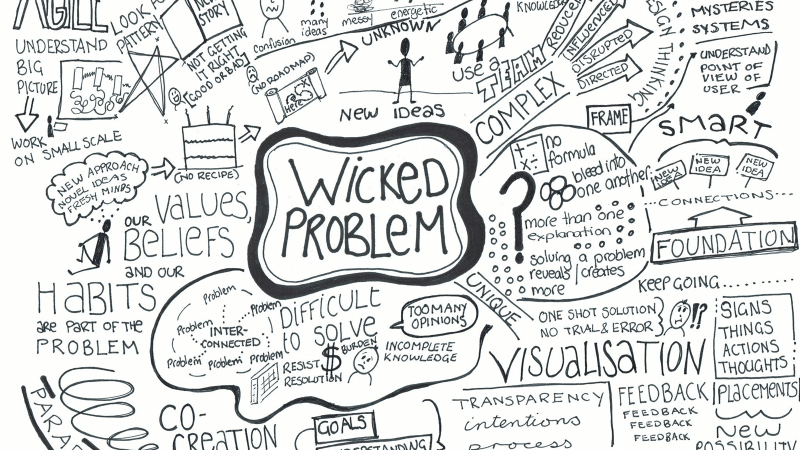
We talked about whether sticking to similar patterns of thinking and behaviour was an appropriate way of dealing with wicked problems, and reflected on the fact that a NALC magazine from almost a quarter of a century ago ran stories about ‘wicked’ issues that were still prevalent in our sector today. I introduced the work of leading system-thinker Myron Rogers and his suggestion that we need to use different processes to get to different outcomes.

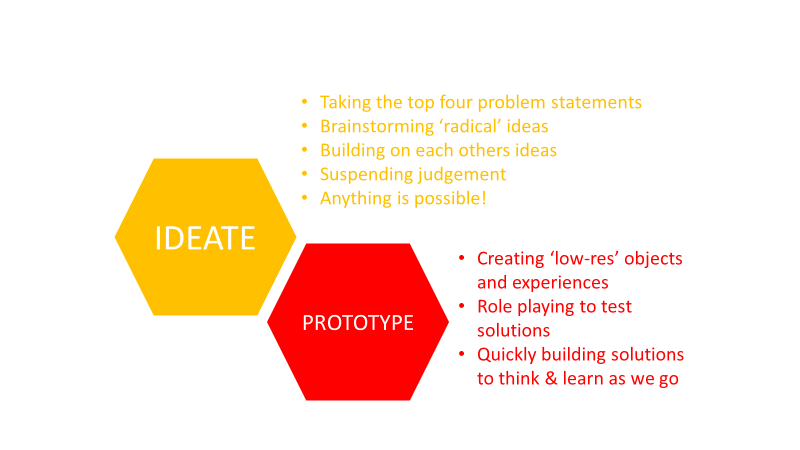
I reflected on the creative design thinking methodology from the Institute of Design and Stanford University that we were using to try to unlock the wicked problems in a new way, which you can read more about in my previous blogs here and here. We focussed in on the next stages – Ideation and Prototyping – which I hoped we’d be taking forward with support from colleagues in the Innovation hub at De Montford University in early 2023.
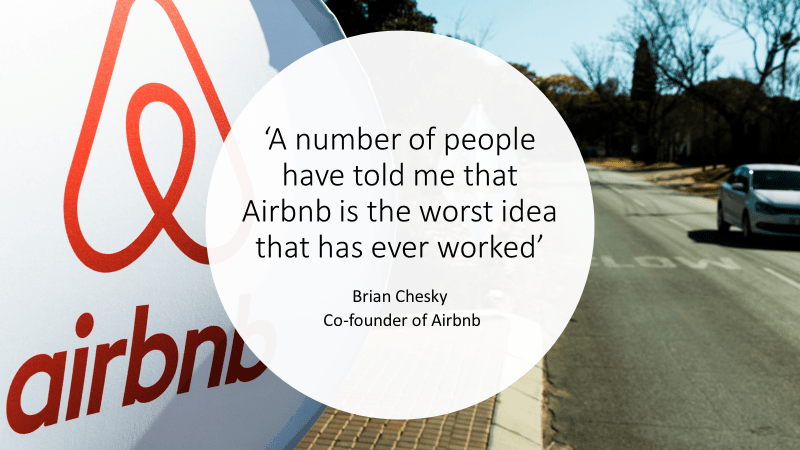
I introduced a case study – Airbnb – as an incredibly successful (est $130billion worth) business that had been established, saved, and grown using creative design thinking. And we reflected on one of the Airbnb founders’ views that echo those attributed to Steve Jobs and his praise of ‘the crazy ones’, that many people had told him that Airbnb was the worst idea that had ever worked!
We then spent a little time dreaming of what a world would be like without the 1972 Local Government Act; with direct access to central government funding; where Local Councils were genuinely valued by Principal Authorities; and where Councillors didn’t micro-manage staff.
And we finished with a great exercise taken from the lateral thinking guru Paul Sloane – reverse the problem. We took each of the 4 problem statements, reversed them to mean the opposite, and then cantered through a quick-fire brainstorm on how to make those new problem statements work. The actual output from that final exercise is written up verbatim in the report here. Have a look. What do you think? Are there anythings in those list that we’re inadvertently doing already? Do these ‘daft’ ideas give us any insight into how we might be able to do the opposite of the opposite when we come to the Ideation work to solve these wicked problems?
 Mornington Crescent: The Taunton variation
Leave a comment