-
Hey, what’s the BIG idea?
Reflections from SLCC national conference, November 2022
SLCC celebrated their 50th Anniversary in style with a fantastic national conference in Hinkley, Leicestershire earlier this month. It was the best-attended national conference in years, with well over 200 delegates and there was certainly a buzz around the place as colleagues caught up with each other, met with exhibitors, and heard from a fantastic range of keynote speakers and other colleagues over the course of two knowledge-packed days.
I had the honour of facilitating a breakout workshop of the morning of day 2 of the conference, titled ‘For Clerks with BIG ideas!’. The session had three main objectives: 1. to update colleagues on the work that I’ve been leading with Jonathan Bourne and others on identifying and tackling a number of ‘wicked problems’ facing senior professionals in our sector; 2. to provide some challenge to our traditional ways of thinking, and a call to arms to for us to dare to try new approaches to create a radically different future; and 3. to provide an example of a fun and effective lateral thinking tool to help loosen-up stuck thinking processes.
I’ve produced a report on the workshop which you can read here.
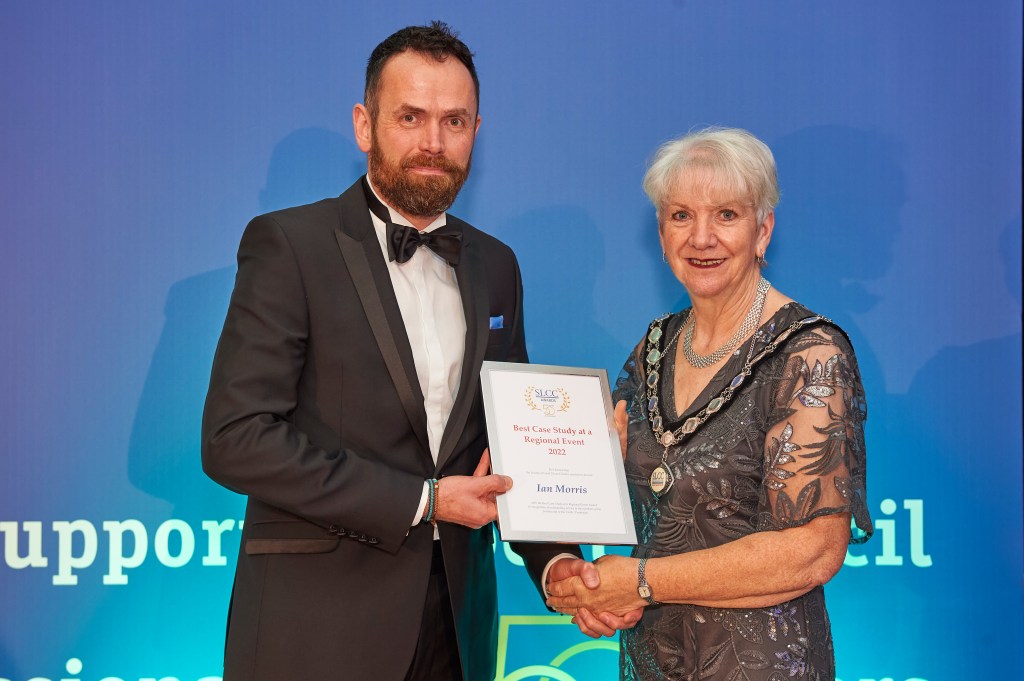
I was somewhat nervous about the workshop. I’d gone to bed relatively early after the black-tie awards dinner the night before, having picked up an award for ‘Best Case Study at a Regional Event’ for my presentation about post-covid challenges to a regional branch conference earlier in 2022. Talk about setting my own bar a bit high – now people were coming to see a workshop by ‘the award winning’ Ian Morris!
And I knew that a few (more than a few?!) colleagues would be a little tired and fragile after the social shenanigans from the night before. In fact, I wasn’t even sure whether many would even turn up for my breakout session, for which they’d need to drag their brains and bodies out of the main auditorium and up some steps to my room.
I needn’t have worried though. The colleagues came in droves, to the extent that they had to pinch additional chairs from an adjoining room and there were still a few people left standing at the back! I’d estimate somewhere between 80-100 people came and took part in the workshop and they were an enthused and energetic bunch.
We talked a bit about ‘wicked problems’, those challenges that we face where we don’t really have a proper handle on the question, let alone the answers!
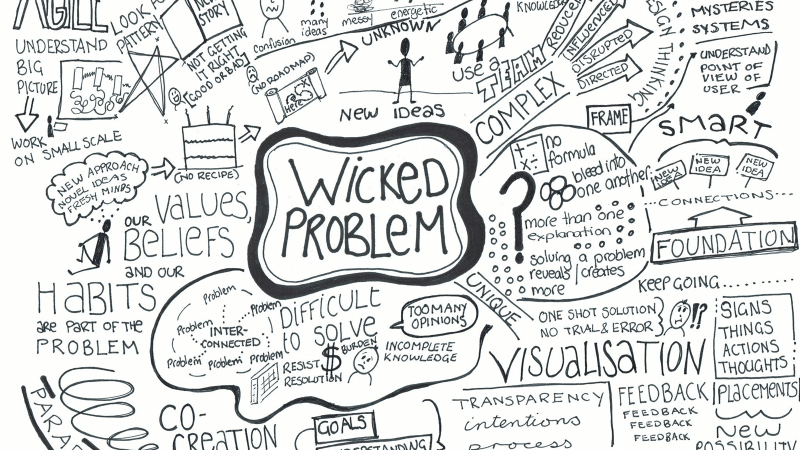
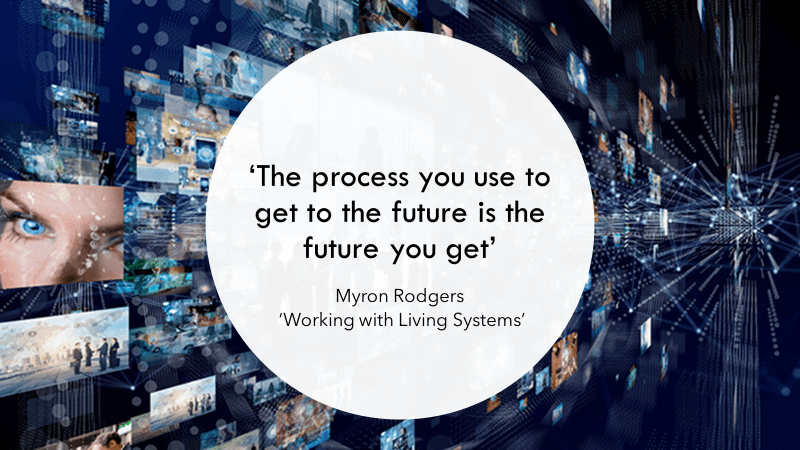
We talked about whether sticking to similar patterns of thinking and behaviour was an appropriate way of dealing with wicked problems, and reflected on the fact that a NALC magazine from almost a quarter of a century ago ran stories about ‘wicked’ issues that were still prevalent in our sector today. I introduced the work of leading system-thinker Myron Rogers and his suggestion that we need to use different processes to get to different outcomes.
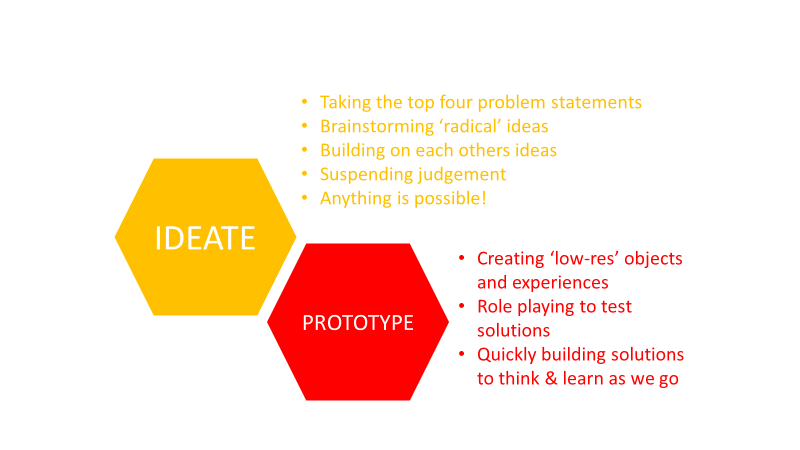
I reflected on the creative design thinking methodology from the Institute of Design and Stanford University that we were using to try to unlock the wicked problems in a new way, which you can read more about in my previous blogs here and here. We focussed in on the next stages – Ideation and Prototyping – which I hoped we’d be taking forward with support from colleagues in the Innovation hub at De Montford University in early 2023.
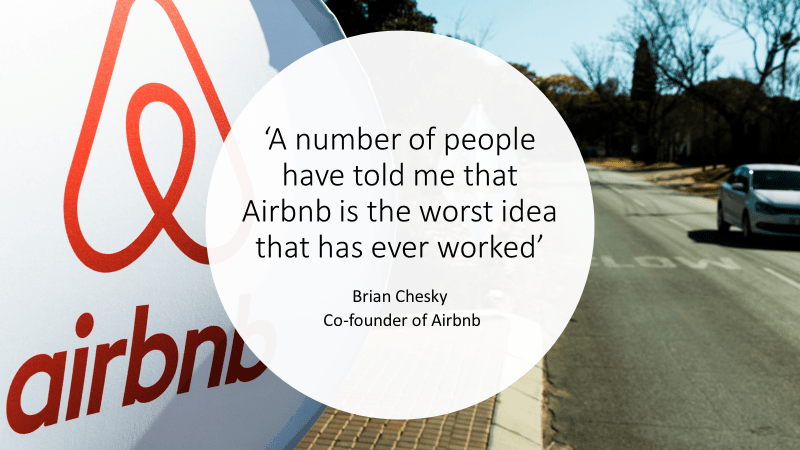
I introduced a case study – Airbnb – as an incredibly successful (est $130billion worth) business that had been established, saved, and grown using creative design thinking. And we reflected on one of the Airbnb founders’ views that echo those attributed to Steve Jobs and his praise of ‘the crazy ones’, that many people had told him that Airbnb was the worst idea that had ever worked!
We then spent a little time dreaming of what a world would be like without the 1972 Local Government Act; with direct access to central government funding; where Local Councils were genuinely valued by Principal Authorities; and where Councillors didn’t micro-manage staff.
And we finished with a great exercise taken from the lateral thinking guru Paul Sloane – reverse the problem. We took each of the 4 problem statements, reversed them to mean the opposite, and then cantered through a quick-fire brainstorm on how to make those new problem statements work. The actual output from that final exercise is written up verbatim in the report here. Have a look. What do you think? Are there anythings in those list that we’re inadvertently doing already? Do these ‘daft’ ideas give us any insight into how we might be able to do the opposite of the opposite when we come to the Ideation work to solve these wicked problems?
-
Ah, so THAT’s the problem?! notes from the SLCC Management In Action conference, Kennilworth, June 2022
I recently had the honour of presenting a ‘What’s the Problem’ workshop as part of the second day at the SLCC Management In Action conference (MIA) in Kenilworth on Friday 10th June 2022.
The workshop was intended to update colleagues on progress made at
the 7th April ’22 ‘Supporting Local Council Clerks’ workshop in London and
to test the ‘problem statements’ that emerged from that event.The workshop was the culmination of the ‘Define’ stage of the Stanford Design Thinking Process which we’ve been following to work through some of the ‘wicked problems’ facing us as senior practitioners in our field. You can read the backstory to this journey in my earlier blog here.
You can read the full report from the Kennilworth ‘What’s the Problem’ workshop here. Here’s a summary of the three main outcomes/outputs from the workshop:
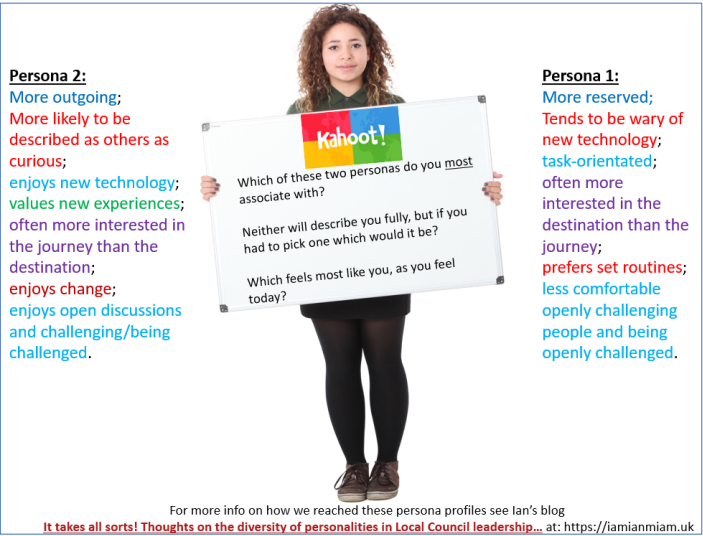
- It takes all sorts! As I waffled on about in my blog here, my early work with a small group of Clerks identified that there are some distinct persona types in our profession. This working hypothesis was further validated at the ‘What’s the Problem?’ workshop where participants were split 41%:59% in identifying more closely with a more reserved, task-orientated ‘persona 1’ type (41%) or a more outgoing, curious ‘persona 2’ type (see image below). We need to be careful about drawing too many conclusions from these findings as this is a clumsy tool, however it is certainly true to say that we are most certainly not a homogeneous flock of clone Clerks and that we should be wary of any potential solutions that suggest a ‘one size fits all’ approach.
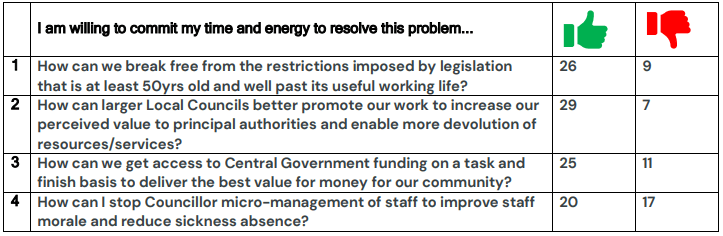
- We’ve chosen 4 problems to take forward! Colleagues who attended the workshop considered a long-list of 9 ‘problem statements’ and through group discussions they whittled the 9 down to a top 4 to be taken forward into the ‘Ideation’ and ‘Prototyping’ phases. The 4 top problems are: 1. How can we break free from the restrictions imposed by legislation that is at least 50yrs old and well past its useful working life?; 2. How can larger Local Councils better promote our work to increase our perceived value to principal authorities and enable more devolution of resources/services?; 3. How can we get access to Central Government funding on a task and finish basis to deliver the best value for money for our community?; 4. How can I stop Councillor micro-management of staff to improve staff morale and reduce sickness absence?
- Clerks are motivated to take action! Perhaps the most surprising output from the workshop was quite how animated and motivated colleagues were about being being personally involved in taking these 4 problem statements forward towards solutions. Colleagues were asked to confirm whether they would personally commit their time and energy to resolve each problem, with the results as per the table below. This level of enthusiasm and engagement bodes well for the next phases of this project.
the results are out! Clerks want to get involved in sorting out the top 4 ‘wicked problems’ So, what happens next? It’s now up to us, Dear Reader, you and I, to stand up and answer this call to arms. I personally have committed to ‘lead’ a workstream on problem statement no1 and I will be calling colleagues together for an ‘Ideation’ session to this effect once the summer holidays are over.
But what about you? Which of the top 4 problem statements hold the most value for you? If there is one that you have a particular interest in then please do let me know and I’m happy to pull some people together to look at the other 3 priority statements.
I’ll be publishing an article about the next stages in the November ’22 edition of ‘The Clerk’ magazine and we’ll be continuing this work in another workshop at the SLCC Annual Conference in November ’22. And please, don’t wait until then to get involved. Reach out to me, or to other colleagues…put yourself forward and get involved in being part of the solution rather than just sitting and wallowing in the problems!
How about it? Why not drop me a line here and I’ll be in touch soon!
- It takes all sorts! As I waffled on about in my blog here, my early work with a small group of Clerks identified that there are some distinct persona types in our profession. This working hypothesis was further validated at the ‘What’s the Problem?’ workshop where participants were split 41%:59% in identifying more closely with a more reserved, task-orientated ‘persona 1’ type (41%) or a more outgoing, curious ‘persona 2’ type (see image below). We need to be careful about drawing too many conclusions from these findings as this is a clumsy tool, however it is certainly true to say that we are most certainly not a homogeneous flock of clone Clerks and that we should be wary of any potential solutions that suggest a ‘one size fits all’ approach.
-
Notes from the larger Councils’ Clerks workshop 7th April 2022
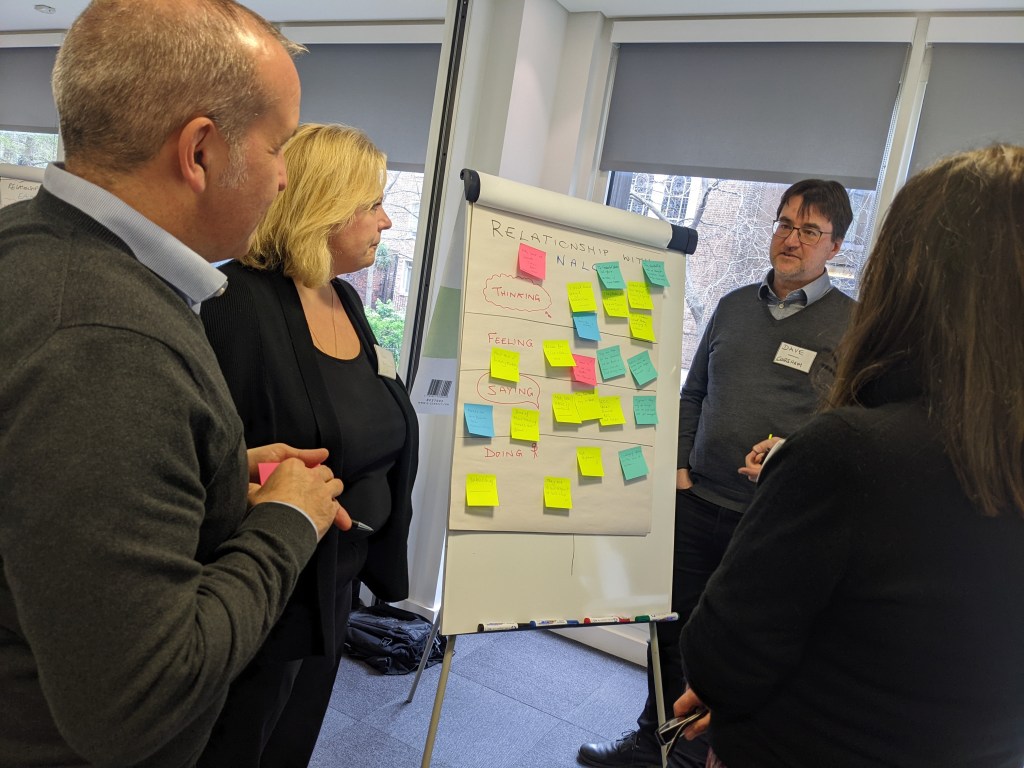
As covered in my previous blogs on this site ‘Walking in each others moccasins: a creative collaboration workshop to solve wicked problems in the Local Council sector‘ and ‘It takes all sorts! Thoughts on the diversity of personalities in Local Council leadership…‘, a group of Chief Officers/Clerks from larger Town Councils met in London on 7th April 2022 to discuss some of the professional and personal challenges that we are facing.
The facilitated workshop was supported by SLCC and kindly sponsored by CCLA, and was very much colleague-driven. Its primary intended outcome was to deliver a series of ‘problem statements’ (as part of the ‘Stanford Design Process‘ methodology) that capture some of the more pressing issues that we want to address as senior officers in our sector.
The report available on this link provides a summary of the output from the workshop and is intended to feed into ongoing work on this subject in coming months.
working together on tricky issues 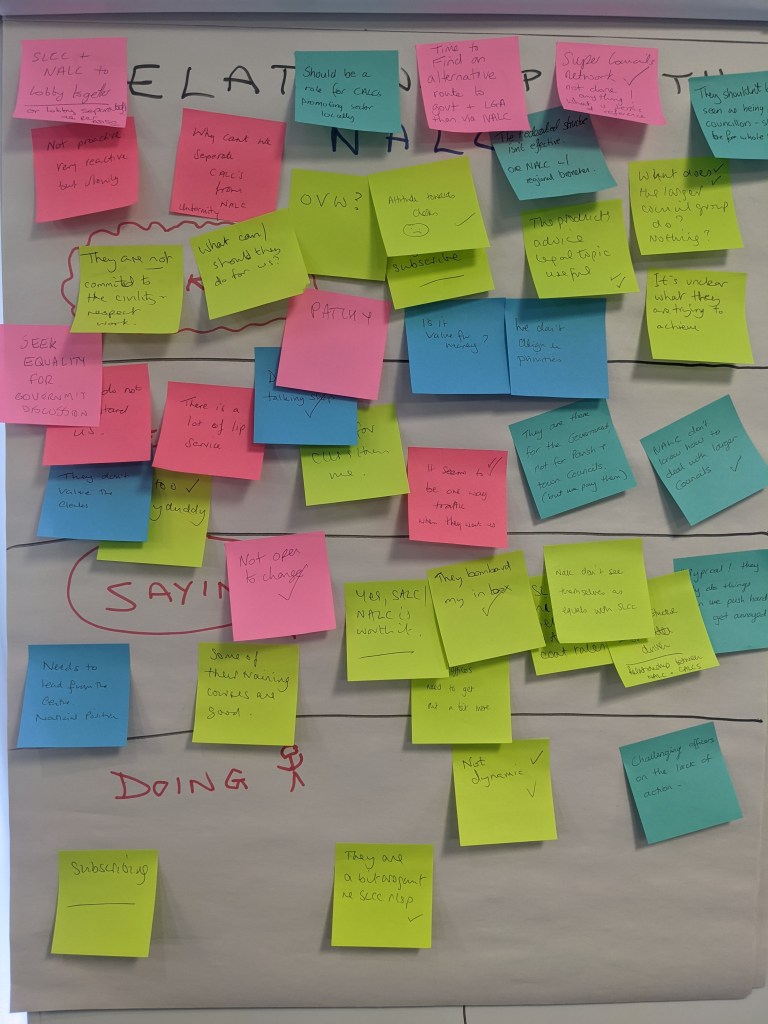
lots of great ideas shared 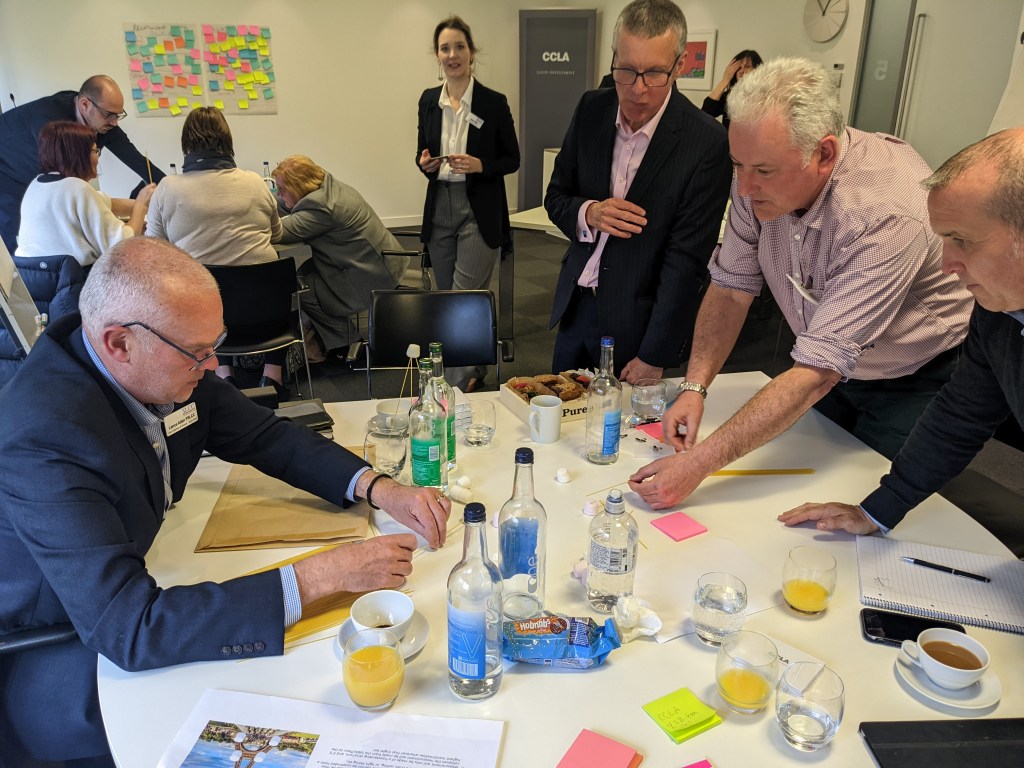
getting stuck in to some challenges 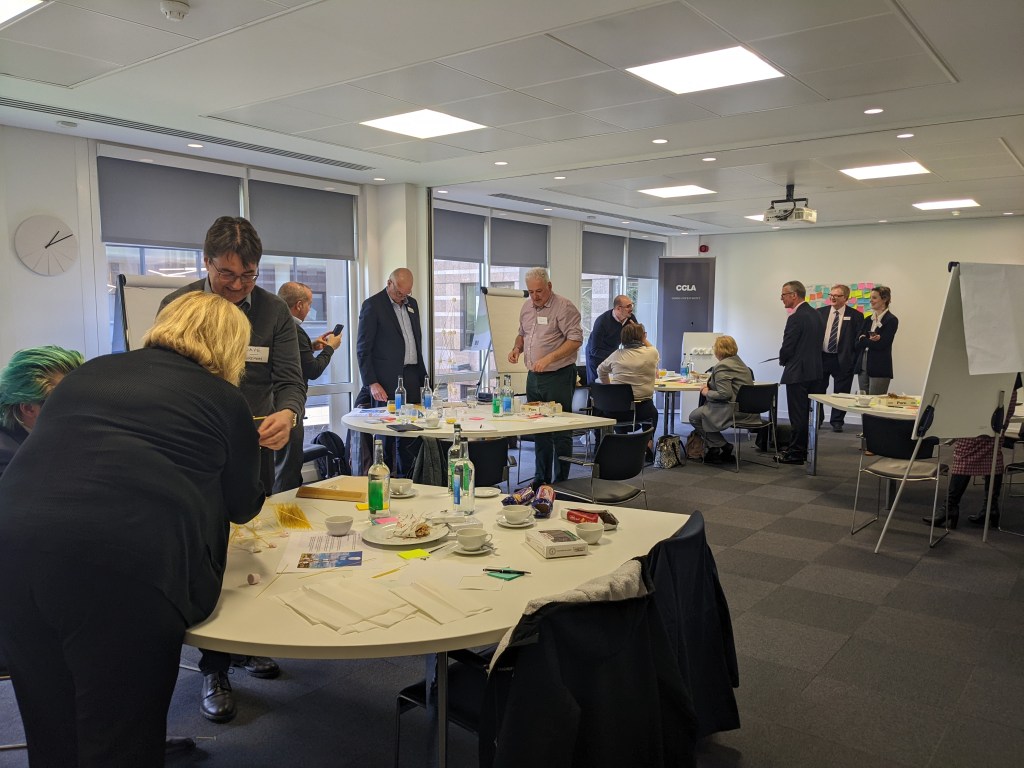
active collaboration and co-working, no sign of a powerpoint presentation here! I’ve listed the problem statements identified by the group in the poll below…please take 5 minutes to read through them. What do you think? Which do you feel are the most important? Let me know by picking your ‘top three’ problem statements from the list below.
Please also feel free to comment on this blog post, it’s really useful to get a debate going on some of these issues!
-
It takes all sorts! Thoughts on the diversity of personalities in Local Council leadership…
In my previous post Walking in each others moccasins: a creative collaboration workshop to solve wicked problems in the Local Council sector I set out the background to an innovative collaboration workshop involving a group of senior Local Council professionals in London in early April 2022. In this post I’d like to expand on the use of ‘personas’ as part of the creative design process that we’re using for the workshop and how it fits with who we are as a group of senior professionals

it takes all sorts! As part of the registration process for the event, potential attendees were asked to complete a short survey that included 12 attitudinal statements based on the ‘big 5’ personality traits (openness to experience; conscientiousness; extraversion; agreeableness; and neuroticism). They were asked to score each statement using a 4-point Likert scale survey: 1= Very like me; 2 = like me; 3 = unlike me; 4 = very unlike me
Methodological limitations are such that the survey results are of limited value in terms of use as a model for explaining the wider world i.e. the Local Council sector at large, but they still revealed some interesting – and useful – polarisation even within this relatively small and self-selecting sample group.
Statement Very Like me Like Me Unlike Me Very Unlike Me I look forward to socialising with people in my professional network 13 6 1 0 I enjoy experimenting with new technologies 6 6 6 4 I tend to be quite reserved 1 8 6 7 I am more interested in the journey than the destination 0 12 5 4 Other people would describe me as curious 8 7 5 1 I am reliable 16 6 0 0 I’m actively engaged with my SLCC local branch 16 5 1 0 I prefer having set routines at work 2 8 9 1 I rarely find faults with others 2 12 7 0 The social element of work is important to me 7 5 5 4 I can be somewhat careless 0 3 7 11 I prefer virtual meetings to physical meetings 1 6 8 5 a tabular summary of larger council clerks’ attitudinal survey respondes March 2022 It is probably fair to say that the respondent group supported the statements I am reliable and I’m are actively engaged with my local SLCC branch.
Nine of the statements split the group, with the most ‘divisive’ statements being that the social element of work is important to me; I enjoy experimenting with new technologies; I prefer having set routes at work; and, other people would describe me as curious. The result for I am more interested in the journey than the destination is an interesting one as although more than half of the respondents reported that this was ‘like them’ the result was skewed by 4 respondents reporting that this was ‘very unlike them’.
The data supports the hypothesis that there is wide range of personality types even in this small group of 22 Clerks from larger Councils who have self-selected to take part in this survey. This suggests that the proposed use of ‘personas’ in the April workshops does have some merit, as a ‘one size fits all’ approach will not be appropriate if we’re to make progress solving issues that face senior practitioners in our sector.
Further analysis of the survey results using statistical analysis software revealed some interesting linear correlations in personality trait factors. There’s a significant caveat in the limitations of this analysis due to the relatively small sample size and use of a 4-point scale, however for the purposes of exploring potential ‘personas’ of Clerks for this workshop some interesting discussion points do seem to emerge.
In broad terms:
- Colleagues who report as being curious are also more likely to enjoy experimenting with new technology and more likely to value the journey more than the destination, and may be less likely to prefer set routines;
- Colleagues who report as being quite reserved are also more likely to prefer set routines and to rarely find faults in other people, and may be less likely to be considered by others to be curious. They are somewhat less likely to enjoy socializing at work or with their wider professional network as much as other colleagues, and may be less interested in the journey than the destination.
- Colleagues who enjoy the social elements of work are also more likely to enjoy socializing with their professional network and are somewhat more likely to find faults with others.
This leads me to propose two potential ‘personas’ that may be useful when considering perspectives around some of the issues being addressed in the workshop in April:
Persona 1: Curious, enjoys new technology, values new experiences, happy to work flexibly, enjoys discussions and challenging/being challenged.
Persona 2: Quite reserved, more wary of new technology, task-orientated, prefers set routines, less comfortable openly challenging people.
A crude division of the responses suggests that the workshop attendees tend towards persona 1, but there is a fair representation of attendees who tend more towards persona 2 at the workshop, with a very rough ratio of 2/3 to 1/3 .
Reducing such a rich collection of variables in terms of personality types, longevity of service, skills, values and beliefs into two crude personas is clearly a clumsy start. But it is a start nonetheless. We’re taking some early and gentle steps in thinking about the issues facing senior practitioners from larger Local Councils, and in order to build empathy and understanding into that work we’re going to walk in the moccasins of those two (and maybe more!) personas as we move forward.
Whatever does or doesn’t come out of the workshop in April I feel that the empirical evidence that this small sample of colleagues from our sector clearly has a broad range of personality types, values and beliefs is still a powerful and positive thing to be able to talk about. We should celebrate this diversity; appreciate our differences; harness the energy that can arise from differences of opinions and attitudes; and beware of ‘group think’ or attempts to frame solutions in ‘one size fits all’ terms.
I’d welcome any feedback, thoughts or opinions on the findings from this survey or the proposed personas. Do you identify with one, both or none of them?!
Vive la Difference! It takes diff’rent strokes to move the world…
-
Walking in each others moccasins: a creative collaboration workshop to solve wicked problems in the Local Council sector
On 7th April 2022 a group of around 25 senior leaders from larger Local Councils in the UK will gather in central London to do something about a wicked problem that we all have a stake in.
The group has self-organised. Rising from a total population of around 8,800 precepting Local Councils in the UK we’re not democratically elected and we’re not claiming to be representative of any social, demographic or geographic dimensions of our professional community.
What we are is a group of colleagues who have a sense that some ‘things’ in our sector and profession aren’t quite how we’d like them to be and that some ‘things’ might be changed for the better. And so we’re going to do something about it. And the way we’re going to do it is going to stretch us a bit too!
Applying creative design thinking to solving problems
The situation that we find ourselves in is a classic ‘type III’ or ‘wicked’ problem. We’re not actually sure what the problem is, and we don’t yet know what the solution is. Is it about representation and lobbying? Relationships with NALC or SLCC? Networking? CPD? Technology? You could ask any one of us to give our perspective of the problem or ideas about what needs to change and you’d get a more-or-less coherent answer – but there’s no clear, shared, expressed consensus on this.

The difference between ‘tame’ and ‘wicked’ problems… Wicked problems lend themselves to creative design solutions. So we’re using the Standford Design School design thinking model to frame our work together.
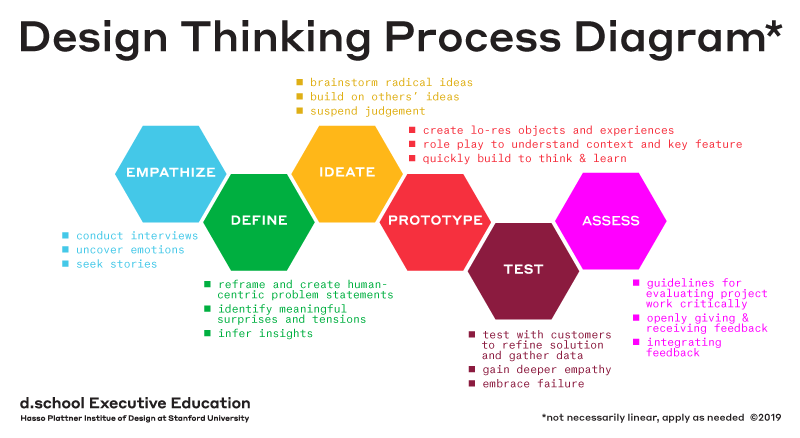
the basic structure of the Stanford design thinking process The workshop on 7th April will be focussed on the ‘Empathize’ and ‘Define’ phases of the Stanford process.
Empathize (or walking in each others moccasins)
Empathy is the centerpiece of the human-centered design process. The Empathize mode is really all about understanding how we are behaving and feeling when we are ‘doing the problem’. Unlike so many ‘real world’ situations where we tent to jump straight from ‘problem’ to ‘solution(s)’, for this project we are going to put in real effort to understand the way that we do things and why, our physical and emotional needs, how we think about world, and what is meaningful to us. We’re going to bump right up to our values and beliefs, what makes use tick, to get to the literal and metaphorical heart of the issue(s).
Two of the three workshop activities on 7th April are designed to do that empathy work. To help us to express our thoughts, feelings, behaviours and to experience those of others. To walk in each other’s moccassins, if only for a while.
Defining the problem (or problems – there may well be more than one point of view)
Having immersed ourselves in ‘the problem’ we’ll transition into the ‘definition’ phase. Here we will make use of ‘personas’ that represent different types of Clerks and how they are perceiving ‘the problem’. These personas may differ by longevity of experience, attitude to new technology, social gregariousness, process or outcome focus, or other such dimensions. And whatever those differences might be, our work is going to respect the differences and try to frame the problem from multiple perspectives so that the resulting solutions are as comprehensive as possible.
And then what?…
The intention of the 7th April workshop is to ‘out’ the issues and emerge with some clear ‘problem statements’. We may well start to come up with some ideas about solutions (we larger council Clerks/Chief Officers are, after all, all about solutions right?!) but we’re going to try to avoid the temptation to jump straight in to solution mode.
Instead, we’re going to spend a couple of months reflecting on the problem statements and checking them out with other people that were missing from the workshop.
And then, once we’ve had time to reflect, we’ll meet again to work on solutions…but that will be the focus of a whole new blog, so you’ll need to watch this space!
Oh, and in case you were wondering, the ‘walking in each others moccasins’ reference comes from a poem by a 19th-century American poet, preacher, suffragist, and temperance reformer Mary T. Latrap (1838-1895). I came across it quite a few years ago when I was completing a Master Practitioner course in NLP as we used the metaphor in terms of the use of empathy and appreciation of other people’s perspectives. I rather like it. Let me know if it resonates with you…
Judge Softly
Pray, don’t find fault with the man that limps,
Or stumbles along the road.
Unless you have worn the moccasins he wears,
Or stumbled beneath the same load.There may be tears in his soles that hurt
Though hidden away from view.
The burden he bears placed on your back
May cause you to stumble and fall, too.Don’t sneer at the man who is down today
Unless you have felt the same blow
That caused his fall or felt the shame
That only the fallen know.You may be strong, but still the blows
That were his, unknown to you in the same way,
May cause you to stagger and fall, too.Don’t be too harsh with the man that sins.
Or pelt him with words, or stone, or disdain.
Unless you are sure you have no sins of your own,
And it’s only wisdom and love that your heart contains.For you know if the tempter’s voice
Should whisper as soft to you,
As it did to him when he went astray,
It might cause you to falter, too.Just walk a mile in his moccasins
Before you abuse, criticize and accuse.
If just for one hour, you could find a way
To see through his eyes, instead of your own muse.I believe you’d be surprised to see
That you’ve been blind and narrow-minded, even unkind.
There are people on reservations and in the ghettos
Who have so little hope, and too much worry on their minds.Brother, there but for the grace of God go you and I.
Just for a moment, slip into his mind and traditions
And see the world through his spirit and eyes
Before you cast a stone or falsely judge his conditions.Remember to walk a mile in his moccasins
And remember the lessons of humanity taught to you by your elders.
We will be known forever by the tracks we leave
In other people’s lives, our kindnesses and generosity.Take the time to walk a mile in his moccasins.
by Mary T. Lathrap, 1895
-
The Emperor’s new clothes? A few naked truths about the need for radical reform of our sector’s legal foundation stone, the Local Government Act 1972
[The original version of this article was first published in The Clerk Magazine (SLCC), July 2023]

Our current legislative framework is in the altogether…
Readers will no doubt be familiar with Hans Christian Andersen’s tale ‘The Emperor’s New Clothes’. You may recall the story of an Emperor and legions of courtiers proudly and publicly proclaiming the finest of (imaginary!) clothes until a child cries out the truth “but he has nothing on!”.
But it’s just a Danish fairytale from 1800s, right? There’s no way it’s of any relevance for the Local Council sector in 2023?
One potential moral of the story is that when there is something wrong in the world, we need brave and insightful individuals to set things right. Or perhaps it’s a warning against the trap of bureaucrats and officials being complicit in the perpetuation of nonsense, motivated by a fear of being exposed as unworthy of their lofty pay and privileges.
In my view, the Local Government Act 1972 (72 Act) is an increasingly ridiculous and embarrassing garment for our sector to be parading around in. It’s woven from the finest of illusionary gold and imaginary silk threads. Here’s just three of many reasons why the 72 Act is in fact a massive wardrobe malfunction for the Local Council sector.
- An assembly of nonsense and confusion: the Parish Meeting
For every one of our parish and town council areas, the ‘Parish Meeting’ is a type of un-incorporated local authority whose membership consists of all local government electors for the parish. The Parish Meeting must assemble at least once a year, and though it can be called to assemble via a few different routes no individual or organisation is required to call it to assemble.
Each Parish Meeting exists as a separate public authority in some parts of UK administrative law. They must comply with H&S legislation and the Equality Act, for example, and during the COVID regulations period the Parish Meeting was included in the list of Public Bodies that were allowed to meet online.
Many of us refer to assemblies of Parish Meetings as just ‘parish meetings’, and we get the verb ‘meeting’ confused with the proper noun Meeting…and madness ensues. The annual assembly of our local Parish Meeting(s) has turned into little more than an administrative task for many a poor Clerk, and the SLCC forum is littered with questions about them. They are, frankly, a complete dog’s breakfast as a legal entity and are an embarrassment to our sector.
There are so many more innovative and creative ways to engage with and empower local communities, isn’t it time that we consigned Parish Meetings to the dressing-up box and improve our wardrobe with something better to wear?
2. It was acceptable in the ‘70s
Many of the issues that we come across in the application of the 72 act arise from a timeline firmly fixed in the past rather than acting as a path towards a better future.
If you read the 72 act side by side with the 1933 LGA you will see that swathes of the 72 act are more or less facsimiles of the 33 act. Yes, that’s right – a substantial amount of our current legislation is derived from a time when we had colonial rule over India, people under 21yrs old couldn’t vote, women weren’t entitled to maternity leave, and homosexuality was a criminal act.
The 72 act predates the internet as we know it, home computers, social media, hybrid working and equalities legislation. Given that two thirds of current Local Council Clerks are 51 – 70yrs old it’s little wonder that some elements of ‘the way we do things’ may seem to many of us as comfortably familiar as a Christmas edition of The Morecambe & Wise Show. But I’d suggest that it’s also as relevant and appropriate to our current community contexts as Eddie Booth, Alf Garnett, or Benny Hill are. The only difference is that those cultural exhibits are now frozen in time and confined to streaming services, DVDs or YouTube snippets, whereas we are bound to live in our 70s legislation cringe-fest on a daily basis.
3. Democracy? What democracy?
One of the foundation stones of the LGA ’72 is the concept of representational democracy, and the term ‘elected’ is strewn throughout the legislation. Democratic engagement is definitive and existential for what we claim to be: ‘Parish councillors shall be elected by the local government electors for the parish…’
But taking the most recent (2022) Local Council elections as a benchmark, of 8068 local council seats up for grabs only 11% were filled through contested elections. A staggering 89% were uncontested or unfilled and left to co-option.
Even where contested elections do happen, the electoral turnout is woefully poor. 18.3million people were registered to vote in the 2021 UK local elections, and average election turnout was just 35.6% – suggesting that there were over 11.7million ‘missing’ voices in local elections that year.
Even in those few Local Council areas where contested elections did take place in 2021, actual voter turnout was as low as 20% for some seats. The assertion that we are a sector borne of representational democracy and with a clear mandate from local people is an illusion, and the more we perpetuate the grand claim that Local Councils are the coalface of democratic governance the more we are akin to the naked Emperor’s complicit courtiers.
We need a drastic rethink of our current legislative framework. Our people – Councillors, staff, and volunteers – do amazing things in local communities, day in and day out. They deserve better from the law. We need to stop pretending that everything is ok, or just going along with it because the person before us seemed to think it was ok. Our empty council seats, low election turn out and striking lack of diversity in our sector suggest that our communities are full of Hans Christian Andersen’s little children, smirking and pointing as they shout “but you’ve got no clothes on!”
Isn’t it time we stopped and told the Emperor a few naked truths? It may be uncomfortable to accept that we’re in desperate need of change. But if we can do it together as a profession we may be able to influence government to work with us to weave the Emperor some new clothes fit for the next 50 years with our integrity intact and without our publicly-exhibited wobbly bits getting in the way.
-
How do you do what you do to me? I wish I knew…

In Professor Steven Griggs’ excellent article ‘Movers and Shakers: Reflections on the Leadership Challenges Facing Local Council Clerks’ (The Clerk, Vol 52, no1, January 2022) he suggests that Local Council Clerks are increasingly performing leadership through movement in both space and time. Steve’s article included a call-to-arms for further dialogue over what it is that Clerks ‘do when they do’ leadership.
In terms of movement in space, the article recognises our roles shifting between formal Council meetings, gathering with volunteers or members of the public, site visits, and he usefully also recognises the different contexts that those spaces represent – from the highly codified and formulated rules of a Council meeting, to more emergent contexts such as working on the ground with the local community, or dealing with a resident’s complaint face-to-face.
In terms of time, the paper identifies some of our actions with the all-to-familiar scenario of ‘firefighting’ that sees us ‘leaping in’ to resolve immediate, present time, issues. And Steve also recognises that temporal movement of ‘leaping ahead’ to work strategically, identifying and facilitating future possibilities and alternatives.
I thought it was interesting that Jonathan Bourne’s article in the same edition (‘Where is local democracy going? Guardians of the balance’, The Clerk, January 2022) touched on the concept of the ‘power’ and movement of the Clerk in a different way. Jonathan urged: ‘…As professional officers we must not abuse our position of knowledge and authority for a personal agenda…We need to need to keep fighting to maintain power for the advice we give, but never overstep that mark by allowing it to become self-serving.’
So, what is ‘power’? And how does power play a part in ‘what we do when we do’ those things that Steve and Jonathan discussed in their articles?
Traditionally our formal professional dialogues on ‘power’ tend to disappear down the techno-legal rabbit-hole of the sector. We talk about the ‘powers’ of the Council, the ‘general power of competence’, we worry about ultra vires decisions, and lament our Council’s ‘lack of power’ to address behaviours in light of the current Standards Regime debacle. Go through the threads on the SLCC Forum and so many of the discussions are based on these, or similar, perspectives of power.
But are any of those techno-legal perspectives on ‘power’ that are so pervasive in our professional forums really what the call for ‘responsible use of power’ (my words) by Jonathan was all about? Or the same ‘power’ that Steve suggests we might be exercising when we are ‘leaping in’ and ‘leaping ahead’ in our daily lives as Clerks?
The French philosopher Michel Foucault suggested that power is based on and makes use of knowledge. And just as knowledge is everywhere, power is everywhere – not because power embraces everything, but because power comes from everywhere. The neo-foucauldian view of power as decentralised and diffused in our daily realities is far from the centered view of power as something which sits at some ‘other place’, held in reserve by Governments or Big Business and then cascaded (or forced!) down through layers of bureaucracy, laws, rules or manipulation of market forces.
So, which is it? Does the power that we can wield as Clerks, the power that Jonathan urges use to use properly and Steve sees us using when we ‘do’ leadership by moving through space and time, really get handed down to us as distinct quanta via the Local Government Act 1972 (etc), or our Council’s Standing Orders (etc), or our Contracts of Employment, or other supposed mechanisms of power transference in our sector? Or, is the power that we have at our disposal really a more amorphous thing, an emergent quality that comes from our relationships in space and time with others around us and based on knowledge, something that is everywhere and nowhere?
Personally, I don’t see the two perspectives as being mutually exclusive. My experience is that both are true. Yes, the use of ‘power’ by us as Clerks is structurally enabled by a set of Standing Orders or a section of the Local Government Act, etc. These artefacts in the corridors of Clerkdom can give us legitimacy, and a raison d’être. In some ways then, perhaps it does makes sense to think of power in terms of quanta, of having a discreet and independent quality. And at the same time, without knowledge and without relationships with others those enabling artefacts and structures are just static exhibits in dusty corridors. And so it also makes sense to think of power as relational, amorphous, evasive, and a more (dare-I-say-it?) ‘political’ thing.
I suppose a pessimistic Clerk that takes the centralist view of power might feel ‘disempowered’ or even defiant – power is something that we don’t have because we haven’t had it transferred to us from above or someone/thing else has taken it from us, or power is something that we should resist, or even run away from, because it is being wielded by someone else due to their real (or perceived!) structural ‘Authority’ that is beyond our own.
But a different pessimistic Clerk could take the decentralised view, and end up feeling ‘disempowered’ as the power they perceive themselves as being missing is so everywhere it is nowhere. Like a bar of soap in the bath, or a game of wac-a-mole, or the scary thing that lives under the bed, decentralised ‘everywhere’ power can be hard to grasp, it can appear from all over the place with very little predictability, and sometimes you really just want to pull the sheets up over your head and hope if doesn’t come for you during the night!

As slippery as a bar of soap? 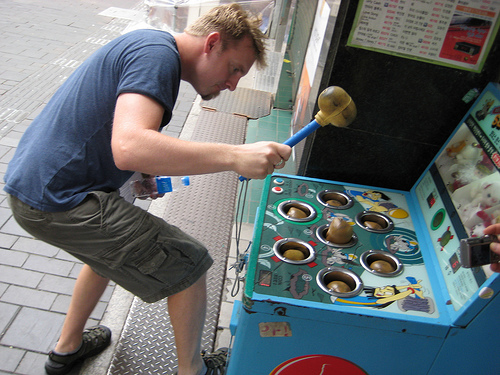
Or popping up all over the place when we least expect it? Or the scary monster under the bed that we just try not to think about? If we accept the proposal that the ‘power’ that we may wish to use when we ‘do’ Clerking does have amorphous, transient, relational qualities then this might mean that our sector’s approach to knowledge, and to the professional development of its Officers, might need to shift. I would suggest that we could usefully turn even more attention towards the relational elements of the role of Clerking, to move even more towards an adaptive and reflexive approach to Clerking that is based not only on techno-legal knowledge but on self-awareness and self-development. And it should embrace this as a core component of modern-day Clerking.
Let’s take a look at our CiLCA qualification – our benchmark for professional accreditation. I recently read a strap-line for CILCA that made the claim ‘A CiLCA qualified Clerk is an efficient and effective Clerk.’ I believe the five units currently covered by CiLCA are: Core roles in local council administration; Law and procedure for local councils; Finance for local councils; Management for local councils; and Community Engagement.
I’m wondering whether those techno-legal knowledge elements of the professional role of Clerking are perhaps essential components of an efficient and effective Clerk…but they are not sufficient. In its current form, the CilCA qualification is not enough. Passing CiLCA will not produce an efficient and effective Clerk.
Perhaps it’s time to add a sixth element to CiLCA, about understanding ourselves and the nature of our power and the ‘power relationships’ in our roles as Clerks? Not only what the law says about ‘Proper Officer’ or ‘RFO’ or whatever, but also on our individual personality types, how we interact with others with different personality types, and skills and tools for self-reflection and adaptiveness.
Perhaps in this way we can give ourselves a better chance of knowing what we do when we do what we do in our leadership roles as efficient and effective Clerks.

Mornington Crescent: The Taunton variation
An elegant form of the game dating back to the 16th century, with parish records revealing effervescent tournaments between ecclesiastical and civil parish leaders. There are several obvious variations from the standard game: motions from the floor are only allowed after Swiss Cottage has been played; a slow player may be declared Co-opted by the player to his/her left and release shall require a written request to resume play that is resolved by secret ballot of the remaining players; Anyone Tooting Upminster is disqualified. [All views expressed in this blog site are personal and are not intended to represent the views of any people, institutions or organisations that I may or may not be associated with in a personal or professional capacity!]
 Mornington Crescent: The Taunton variation
Leave a comment